Tuesday, March 22, 2016

RECIPE: Vietnamese Chicken, Grapefruit, and Cabbage Salad

Vietnamese may be my favorite of all the various and wonderful Asian cuisines of the world. And though it breaks my heart that I've still not made it to Vietnam, to actually taste the cuisine in its country of origin, I swear that I will, one day soon, make it to that southeast Asian "motherland" of fine food and gorgeous landscape. Until then, my favorite Vietnamese restaurant for culinary escapism happens to be just a few miles down the road from my parents' home in Boca Raton, Florida at La Tre (yes, this restaurant really is THAT good), and I have the owner's brother's out-of-print cookbook, from when his brother ran a sister restaurant in Connecticut. For some dishes, like this one, I no longer need the recipe -- that's how often I make this amazingly delicious and simple salad. But I'll provide my version of it now, for my readers.

This is a salad that's equally delicious in winter as it is in the summer. It's always refreshing, but it's also reminiscent of the Sicilian fennel-blood orange-olive salad that I'm so fond of in winter months.
This is when the citrus in the U.S. is at its peak, so enjoying this salad between Thanksgiving and Easter will get you that wonderful Florida grapefruit -- or even pomelo, which was probably the original fruit used in this dish -- at its sweetest and juiciest. Called goi-ga in Vietnamese, this salad is easily prepared and tossed in a flavor-rich, balanced, umami-packed dressing. It feels indulgent, but really, it's an incredibly healthy, light meal, or precursor to one. 

VIETNAMESE CHICKEN, GRAPEFRUIT, AND CABBAGE SALAD (Goi-Ga)
(Serves 6-8)

3 large poached and chilled chicken breasts, shredded
1 large carrot, grated into thin strips or julienned (optional)
1/2 head of green or napa cabbage, finely shredded
1/4 small head red cabbage (if desired), finely shredded
1/2 medium red onion, very thinly sliced
2 large pink grapefruits or pomelos, peeled and sectioned
1/3 cup chopped fresh mint
2 TBS. chopped fresh cilantro
1/2 cup toasted chopped peanuts

Simple marinade:
2 TBS. white vinegar
3 TBS. sugar
1/2 tsp freshly ground black pepper
1/4 tsp salt
1/4 cup water 

Nuoc Cham Dressing:
Mix all ingredients, heat to a simmer, then remove from heat, and chill in fridge for an hour.
1 small red chile, minced (or 1.5 teaspoons dried chile flakes)
1 TBS. white vinegar
1/2 cup Vietnamese fish sauce (nuoc mam) 
1/4 cup fresh lime juice
2 cloves minced garlic
1/2 cup light brown sugar 

- Prepare both the marinade and the dressing and set aside.

- In a large bowl, combine the cabbages, carrot, and onion. Dress with marinade, and set aside to soften for 10 minutes.  

- Drain off most of the marinade and add the Nuoc Cham dressing. 

- Add the shredded chicken and grapefruit sections, and toss to coat.

- Place the salad on a platter or large flat bowl, add the fresh herbs and peanuts, and serve.  
 

Friday, March 11, 2016

QUICK BITE: Pasticciotto Leccese

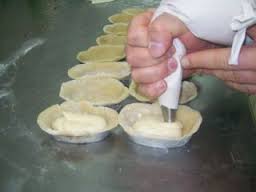
I'd been to the Salento area of Puglia a few times before I'd heard about a local pastry specialty called Pasticciotto Leccese. And then I finally tasted the thing -- normally considered a breakfast item (often paired with the local coffee finished with almond milk) -- at which point I thought to myself, where have you been all my life?

I am a chocoholic and not big on sweets senza chocolate, to be honest. I make a few exceptions (carrot cake, cheesecake, and fruit pies, oh my!) -- when the sweet is done really well, or is simply delicious enough to warrant my chocolate waiver. Pasticciotto Leccese, consider yourself waived.  As I said, this is really a breakfast item -- the perfect "Continental" breakfast pastry, much more interesting than your standard cornetto or croissant. There is a firm but creamy center of the pastry, a cooked pastry cream that, in many versions I tasted, had a mild hint of almond in it (something that wouldn't surprise me as an ingredient in the pastry cream, considering the Salentini's fondness for almond milk in place of regular dairy milk).
The crust of the pasticciotto is no ordinary pasta frolla (never a favorite of mine), the standard dough for Italian pastries. Frolla owes its bright yellow color to the gorgeous Italian orange egg yolks, and the particular flavor is thanks to the addition of its signature orangeflower water. The pasticciotto dough is more delicate, tender, and flakier. It's firm enough to hold the pastry cream center within its walls, but lard in the dough is what makes this baby so damned different.
The pasticciotto was created in a small town south of Lecce (as in "Leccese"), called Galatina, in the mid-18th century. Pasticceria Ascalone -- still in business and cranking out the pasticciotti -- lays claim to their invention. Supposedly it was to earn favor among other local townspeople. Let them eat pasticciotti! There are, of course, variations on the classic. My favorite variation (no surprise here) is the chocolate pasticciotto Leccese. Some are filled with Nutella, which is equally delicious.
My friends Monica and Marcello, who were residents of Salento and owned the B&B where my friends and I stayed a few times in recent years, introduced me to this delicacy for breakfast one morning, and it completely changed the way I viewed breakfast in Italy. Which is to say, colazione in Salento is a thing of beauty: fresh fruit (often figs picked from the tree), great coffee and tea with almond milk, and pasticciotto Leccese. This is my morning happy place.


Friday, March 4, 2016

SEASONAL INGREDIENT: Winter Veg

Roman broccoli, cauliflower, and Roman specialty puntarelle (cleaned chicory stems) in the market in Rome.
We're still suffering through winter weather (yes, snow in New York City today, people!). 
But the cold outside doesn't mean we can't enjoy some wonderful produce -- and specifically, winter vegetables -- indoors in our kitchens. There's beauty in their variety of flavor but also in their shapes, sizes, colors, and uses. It's never been easier to "eat the rainbow" of colors in vegetables alone, and many of these items are hearty enough to make into a soup, to pair with the rich meat stews of the season, or to skip the meat altogether and enjoy these gifts of nature on their own as a substantial, diet- and environment-friendly alternative to animal proteins. Below are some great options, as well as some ideas as to what to do with these wonderful winter veggies:

- Radicchio tardivo: This elegant, elongated variety of radicchio di Treviso comes from northeastern Italy around the town of Treviso in the Veneto. It has slim leaves that are white and tipped with burgundy, a result of a second "forced" growth process when the harvested heads are placed in growing tanks with flowing water for a second growth; they're then harvested late (hence "tardivo"). Their crisp, bitter leaves are a thing of beauty, and work especially well in dishes of the area, like a risotto or pasta with radicchio, gorgonzola, and walnuts. This veg is great grilled, or oven-roasted with a little balsamic and a sprinkling of sugar to take away the bitter edge. It's also great in a winter salad with endive and perhaps some kale or watercress.

- Celery root, or Celeriac: This is quite literally the root of celery, but as a root vegetable it's got a bit of starch to it. You can slice into matchsticks to enjoy raw in a salad, or cook it with a potato or two to make a healthier, lower-carb version of mashed potatoes 
(trick: the lack of gluten in the celeriac makes its substitution for mashed taters a great healthy upgrade, and you can put it in a food processor for a smooth puree without the gummy mess of potatoes alone). This also means it makes a fabulous soup -- it's great comfort food in cold weather, especially with some fried leeks and a drizzle of maple syrup on top.

- Cauliflower: Much has been made lately of the previously-lowly, pale head of cauliflower, and with good reason. This pallid cruciferous vegetable is actually really healthy for us, and is incredibly versatile. Cook the florets as is traditional and you can toss them with pasta, pine nuts, and raisins in olive oil with a splash of wine and you have a great pasta dish, Sicilian in origin. Pulse in a food processor and you have gluten-free couscous. Roast whole in the oven rubbed with olive oil, salt, and spices, and you have an excellent main course meat stand-in (You can also slice the cauliflower into "steaks" and serve vegetarian versions of steak preparations: cauliflower au poivre, anyone?).
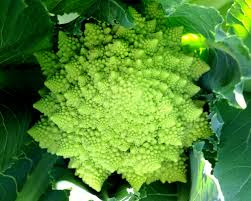
- Broccolo romano, or Romanesco: This is what Romans refer to simply as a "broccolo" -- they think the dark green version that is our standard is "broccolo siciliano" (Sicilian broccoli). This is a popular side dish in Rome, cooked until meltingly tender in olive oil, with garlic and peperoncino. Mammamia! It's also tossed with pasta, and served in the disappearing-but-traditional Roman soup, broccoli ed arzilla made with stingray and roman broccoli in broth -- really delicious.

- Winter squash: This family includes butternut, spaghetti, acorn, delicata, and on and on. Roasted with just a drizzle of olive oil, a few cloves of garlic, and a sprinkling of sea salt, winter squash are healthful and a great substitute for potatoes alongside proteins. They can be pureed into amazing soups. They can be roasted alongside other vegetables. They can become filling for pastas like ravioli. Spaghetti squash can be served like its namesake pasta, in place of the pasta itself! And delicata squash can be served skin-on, for extra ease in prep...and extra fiber. These nubby veggies are versatile and amazingly delicious, and even the seeds should be saved, cleaned, and roasted to make into a healthy snack, to sprinkle on salads, to grind into a pesto...even to candy for dessert!
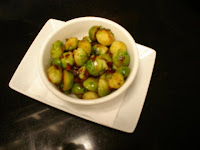
- Brussels sprouts: These mini-cabbages named after a Northern European city (still a mystery) have caught on again since the "new" century, and have become a ubiquitous side dish in restaurants from Manhattan to Minneapolis. And good for them! Because they're very good for us, another cruciferous veggie full of fiber and vitamins. I make mine with pancetta, shallots, balsamic or sherry vinegar, and a touch of honey -- and they're a perennial Thanksgiving favorite.

- Cabbage: Big brother to the brussels sprouts above, cabbage is another healthful, incredibly versatile veg. There are many varieties, including regular green or white cabbage, red cabbage, and savoy cabbage with its slightly curlier, thinner leaves. Cabbage can be shredded and eaten raw, as in cole slaw, or cooked, as in stewed cabbage (I like mine sweet-and-sour, like they make it in central Europe, stewed with some vinegar, salt and sugar). It can be fermented and transformed into kimchi, or simply eaten as part of a salad. It can be stuffed with ground meat or vegetables and stewed for stuffed cabbage or other savory packets or spring rolls. It's also great in a simple soup with a veggie broth, brightened with the acidity of a splash of vinegar. 

- Beets: Another underdog root veggie we root for (food pun!), the beet was and is still "having a moment" on menus across America. These former outcasts have experienced a renaissance, and I'm happy about that, because they're gorgeous and packed full of vitamins and antioxidants, and they make a great soup (borscht), a great salad ingredient, and a great side dish.
They're a substitute for the deep ruby color of raw beef, so vegan tartares now have new life. They can be golden or fuchsia or swirly candy-cane colored (chioggia beets), they can be sliced thinly or fried into chips or served julienned in a salad with lots of carrots and pistachios and fresh herbs and warm spices like cumin and ras-el-hanout...They pair really well with those carrots, but also with goat cheese and ricotta cheese, with nuts and herbs, they're great dressed with vinegars or with sweet-sour pomegranate molasses or silan date syrup for a Middle Eastern-North African vibe, and they're great in Central and Eastern European preparations, with dill and meat and potatoes and flaky smoked fish...they're as versatile as they are pretty, and as inexpensive health powerhouses, they can't be...well, you know...

Enjoy the healthy vegetable variety that comes with the winter season, and get your fill while you can!
 

Thursday, February 25, 2016

MARKETS: Jerusalem's Shuk Machane Yehuda


Jerusalem is in the heart of one of the world's most ancient crossroads of cultures, religions, history...time itself, really. Walking through the city's Machane Yehuda market, one feels a part of the timeless bustle.

Referred to as a shuk ("shook") in Hebrew, this marketplace was originally open-air, and is now partially covered. This neighborhood outside of the old city walls was established in 1887, founded by three business partners (including one German Protestant), named after the brother of one of the owners (Yehuda). A market was established at the end of the 19th century to serve the growing areas outside the Old City, where Arab vendors sold their goods. But under Ottoman rule, the market expanded rapidly and without real order, and sanitation conditions grew unsustainabe until the late 1920's, when British mandate authorities cleared everyone out and installed a permanent market structure known by its present-day name, the Mechane Yehuda Market.

As is common around historic market squares in cities the world over, the major streets on the perimeters of the market are bisected by smaller side streets that were once all named for items sold in the market -- in this case, fruits and nuts: Afarsek (peach) Street, Agas (pear) Street, Egoz (walnut) Street, Shaked (almond), Shezif (plum), Tapuach (apple), and Tut (berry) Streets. In 1931, a new section of the market was built by 20 traders who previously only had temporary wooden stalls in this area to the west of the main market. This arm of the market was dubbed the Iraqi Market, for its traders were largely Iraqi Jews. Today the Iraqi Market is located right off of Mechane Yehuda Street, and offers lots of exotic middle eastern spices, fruits, herbs, and various specialty items.


The Machane Yehuda market boasts more than 250 vendors of all varieties. Some sell fresh fruits and vegetables as in a greenmarket; others sell baked goods and breads; cured meats and cheeses; nuts, seeds, pastas, spices and spice blends; meat and fish; wines and liquors; and some sell non-edibles like clothing and shoes, textiles and tapestries, housewares, and Judaica. (No market in Israel is complete without some kind of Judaica shop contained within its walls!). You'll be overwhelmed by the gorgeous displays of fresh fruit and veggies, which clearly place you smack in the middle of the Middle East and Mediterranean! Pomegranates (thought to be the original "apple" in the Garden of Eden) abound, and figs and dates and eggplant and tomatoes and olives are everywhere.


Another classic in large markets? Plenty of stands and shops selling prepared foods to eat on the spot, or while walking the market lanes. There are a multitude of falafel, shawarma, kebab, shashlik, mixed grill, baklava, and halva stands, along with juice bars and fruit sellers with fruit cups and various preparations ready for easy consumption. All of this is within the classic market atmosphere of vendors yelling out prices to entice shoppers, and those exhibiting their goods to passersby. On Thurdays and particularly Friday afternoons, the market is packed with shoppers stocking up for shabbat, the sabbath, since the devout must prepare meals ahead of time so no work is done during the sabbath (until sundown Saturday evening). Friday afternoon in the marketplace hears the sounding of the bugle marking the closing of the market for shabbat. Everyone scurries to finish their shopping while there's still time.


In the aughts, a major overhaul took place in the Machane Yehuda Market. The infrastructure was updated, roads were repaved, and some open areas were covered. This is partly in response to the 1997 and 2002 terrorist attacks of the marketplace which killed 23 people. One change that the market's board put into place -- to bring back the tourists and the local shoppers alike -- was drawing in more cafes, boutiques, and bars (some featuring live music) to set up shop here. The thought was that these "hot spots" would lure more regular visitors to become frequent shoppers -- and frequent patrons of the cafes and restaurants. And it's worked. The shuk has become quite a nightlife hub in Jerusalem. In fact, the market has so enlivened the neighborhood that one of the top restaurants in Jerusalem -- and all of Israel, by most standards -- is located within the market: Machneyuda. Launched in 2009, this has been one of the hardest reservations to get in Israel (I know, I tried!). Notable Chef and slow food advocate Yossi Asaf paired with some local Iron Chef winners to create a market-driven, homey environment for both traditional Levant-area specialties and modern Mediterranean cuisine. The bi-level restaurant is always bustling, and the open kitchen allows diners to share in the high-energy, frenetic restaurant kitchen experience. Clearly the Machane Yehuda shuk and all of its winding alleyways and side streets, and its restaurants and bars contained within, have become a Jerusalem epicenter for culinary and cultural experiences. Don't miss it the next time you're in the Holy Land!


MACHANE YEHUDA MARKET
Official website in English:
http://www.machne.co.il/en/
Sun - Thurs, 8 am to 7 pm
Friday 8 am to 3 pm
Bars and restaurants that stay open later within the market generally must follow city rules, including a ban on loud music after 11 pm.

Machneyuda Restaurant
Beit Ya'akov St. 10
Jerusalem
+972 2 533 3442
http://www.machneyuda.co.il/en

Thursday, February 18, 2016

RECIPE: Ethereal Mushroom Soup

It is winter in New York. And while this year has been a much milder winter season than in recent years, it's still February. It's still cold in spells and we're all still starved for sun, birds chirping, and the sun setting after 6 pm. Personally, I was really looking forward to a fantastic 2016...and then promptly got sick on January 1st. And again on January 31st. So, I've had a lot of "down time," as it were, to ponder life, and what to eat. I've had plenty of cozy hours indoors, as a sick couch potato and a binge-watcher and a reader and a daydreamer, and in all of this time, I've been making a lot of soups. This is nothing new for me for the early part of the year, and soups are a very healthy way to warm the bones and fill up with a great bowl of healthy tasty stuff. I've made some of the usuals in my repertoire: Tuscan white bean and kale soup, butternut squash puree, Asian beef broth with noodles and veggies, and of course Jewish penicillin a.k.a. matzo ball soup. But while I was between cold and flu, in mid-January, I had a partial Roman posse over for a dinner party -- they were my ladies who were in from Rome and Boston and Rhode Island and some from the NY metro area, and I of course wanted to feed them well. 

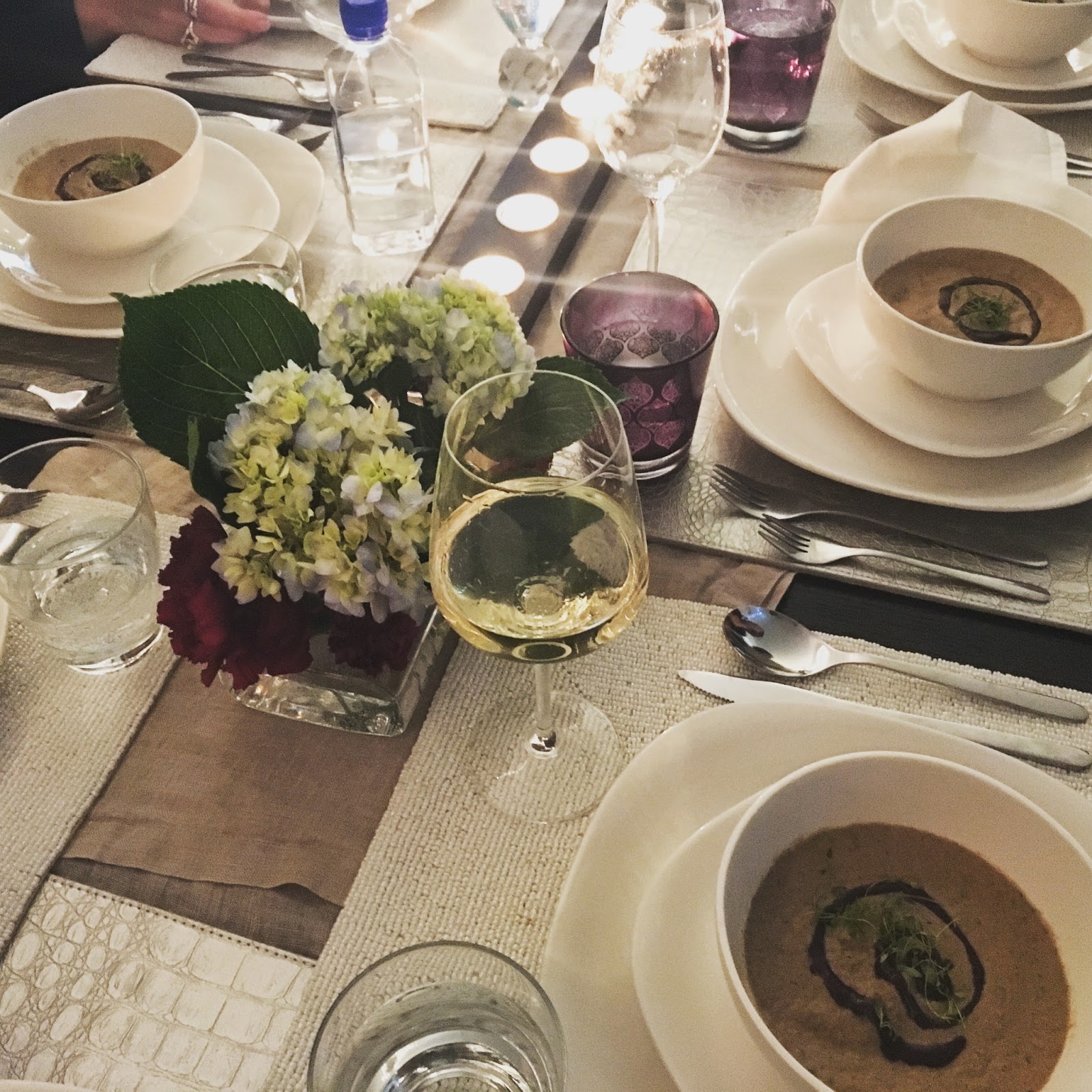
After appetizers and stuzzichini and prosecco in the living room, we started in on the meal with a creamy pureed mushroom soup. This was inspired by an amazing version my friend Jessica ordered in Santiago, Chile, at a very spiffy restaurant called Puerto Fuy (see http://bluaubergine.blogspot.com/2015/01/escapes-santiago-chile.html). It was the essence of mushroom earthiness, but it was also somehow light as air. I wanted to recreate that, not only because it was so delicious, but also because my friend Jessica was in attendance at my dinner party, and it had been pretty much exactly two years since we'd eaten that sublime soup. Also, Jessica declares that she is "over chewing" -- and as a result, she tends to puree everything she possibly can. She appreciated my efforts on behalf of her jaw! But really, I was incorporating two of the healthiest, anti-carcinogenic foods (mushrooms and onions) together in one dish. The recipe is simple because I wanted the soup to be a distilled essence. I wanted to taste the variety of mushrooms that went into the soup, and little else. So that's how I made it. I topped it off with fresh thyme and a gastrique of blackberries and balsamic, inspired by the Italian idea of "frutti del bosco" -- literally translated, it's "fruits of the forest," and that's what blackberries and mushrooms are. In Rome, the old lady in my local market square where I sourced porcini and funghi of all kinds sold only two things: mushrooms and berries, in theory, two items that could have been gathered in one trip to the forest. Frutti del bosco. Here they are, and here is my recipe. This is for you, Jess, and for our trip to Chile, and for the old mushroom lady in Campo de Fiori who is no more. Enjoy it on one of these cold winter nights.

ETHEREAL MUSHROOM SOUP
Serves 6-8 


4 oz. dried porcini mushrooms
3 tbsp. extra virgin olive oil
1 white onion, finely diced 
2 cloves garlic, finely diced
2 pints white mushrooms, cleaned and chopped
2 pints mixed Asian mushrooms (shitake, maitake, etc.)
2 pints hen of the woods or oyster mushrooms
4 large portobello mushroom caps
10 cups mushroom stock/vegetable broth (including the water from soaking the dried porcini)  
3/4 cup organic heavy cream  
sprigs of thyme and rosemary
Salt and pepper to taste

- Bring 2 cups of water to a boil, and pour over dried porcini mushrooms in a bowl to soak for at least 10 minutes.
- Wipe mushrooms clean with a damp cloth, cut off stems with dirt attached, and give them all a rough chop so they're all roughly the same size (1/4 - 1/2 inch pieces)
- In a large soup pot, warm the olive oil over medium heat. Toss in the onion and garlic and saute for 60 seconds to soften. Lower the heat slightly and sweat the onion and garlic for another 3 minutes.
- Add the mushrooms, bit by bit, just so there are enough to cover the bottom of the pan. When they cook down a bit, add another bunch to the pot. Continue this way until all of the mushrooms are cooking (and losing water) in the pot. Sprinkle with salt and pepper.
- Remove the soaking porcini from the water with your hands, and ring out the mushrooms so they have as little water content as possible (keep the water!). Chop these and add them to the cooking mushrooms in the pot.
- Strain the mushroom soaking liquid through a mesh strainer lined with a paper towel, to catch any sediment, into a bowl.
- Add the mushroom soaking liquid and mushroom or vegetable stock to the mushrooms in the pot. Allow this to come to a boil, then turn down the heat to low and allow to simmer for 30 minutes, so the flavors meld. You can add a touch of thyme and/or rosemary at this point (but sparingly -- otherwise the herbs tend to taste medicinal).
- Using an immersion blender, puree the mushrooms and stock until smooth. At this point, add the heavy cream and adjust for salt and pepper. Blend again. The soup can be thinned with additional stock if necessary.

Soup can be served with a fresh herb garnish and a blackberry gastrique: simply cook a pint or two of blackberries in a small saucepan with a pinch of salt, a couple of tablespoons of sugar, and 1/2 cup balsamic vinegar. Puree in a blender or food processor when done, and strain through a mesh sieve into a squirt bottle. Simply squeeze a swirl of blackberry gastrique onto the top of the mushroom soup just before serving.