Monday, January 25, 2016

QUICK BITE: Bone Broth, Your Way

It's the dead of winter, and the entire east coast has just been hit with a major blizzard. This past weekend was, as they say, perfect "cooking project" weather. And it still is: perfect for a good, long simmer of beef bones thick with marrow on the stove, perfuming the air of your home and warming your kitchen. And then, once this broth is made, you can do so much with it. It's great just as is, of course. Much has been made of a "bone broth" revolution of sorts. Really, this is just broth, stock, whatever your want to call it -- that's been the base of soup and sauce recipes for ages. 

Some say to roast the bones and veggies in the oven first; I usually like to keep in uncomplicated when cooking this at home, and just use one pot -- a great big soup pot that's wide enough so that you can first roast the beef bones in one layer. I use a mix of marrow bones and some with a little meat on them, like short ribs or oxtail. I encourage a little caramelization with some tomato concentrate on top of the bones, and roast them on the stovetop or oven first until browned. Then I add the the carrots, onions, and celery (leeks and shallots if you're feeling it), along with lots of water, peppercorns, and a bay leaf. And really, that's it. This needs to simmer slow and low for as few as 6 hours, and as many as 24. Skim the ft occasionally from the top, and when it's done, strain it, cool it down and then place in storage containers in the fridge to completely cool overnight. This allows you to easily scrape the fat off the top the next day.


Now, the fun part. of course, you can sip the beef broth as is, even in a mug like the most restorative cup of coffee and lunch, combined. But the great thing about making a huge potload of beef broth is getting creative with it! You can freeze some in ice cube trays and then store in a ziploc bag in the freezer for use in sauces and individual servings later on. You can add some noodles and some vegetables and have a beef noodle soup. You can caramelize a pan full of sliced onions, sprinkle with flour, and add the broth for a wonderful French onion soup (top with a baguette slice and gruyere cheese for the real deal!). 


Or, make a wonderful, healthy, super-tasty Vietnamese-inspired version, like you see here. I took the basic beef broth and simmered it with a bit of soy sauce, fish sauce, rice wine vinegar, pineapple chunks, chopped lemongrass, kaffir lime leaf, star anise, szechuan peppercorns, coriander seed, and chili pepper. The broth was infused with all of these warm and spicy notes over the course of about 2 hours.
Just before serving, I added some rice noodles, thinly-sliced bok choy, fresh cilantro and mint, a healthy squeeze of lime juice, and a bit of sriracha sauce, both blended in and drizzled on top. This is an incredibly fortifying soup-as-meal that's great both in cold weather and in hot. It's both edifying and refreshing. And it's utterly satisfying. You can create your own variations on this Asian noodle soup theme: add some red or green curry paste, a protein of choice, any kind of greens, herbs, citrus, spices. Have fun playing with your food! Keep warm, and keep cooking...

Thursday, January 14, 2016

FOOD PORN: A LOOK BACK 2015 (Catering Edition)


Here we are in 2016 (can you believe it?!), and once again, the final month of the year proved to be a happily hectic one for Blu Aubergine. I managed to keep up to some degree with blogging, but never as much as I'd like. 

So here, now, I thought I'd start the new year off with something different than what's currently clogging your inbox. I'll hold off on the healthy eating and new year resolution diets and soup recipes (though those are coming!) to reflect on some of the more drool-worthy creations I served to my clients over the past year. This is a multi-part posting under the Blu Aubergine blog category FOOD PORN that I started last year. It's simply photos of the more popular and pretty dishes I made in 2015 -- trolling for culinary salivary stimulation. Yes, I'm still unapologetic.

We catered a sushi-themed birthday party with a Japanese buffet -- all during a snowstorm! 

 
Farm-fresh crudite with my famous hummus is always a hit.

Oven-roasted heirloom cherry tomatoes atop herb-crusted goat cheese: one of many varieties of crostini in our catering repertoire.

Scallop ceviche: spicy, fresh, and light, served with crispy tortilla chips.
A modern version of Oysters Rockefeller...
Home-cured salmon and goat cheese with red onion on baguette crisps: more crostini!
Roasted red pepper soup with parmigiano croutons -- Cheese and salumi platter


Crostini topped with London broil and chimichurri; Crostini with ricotta and prosciutto, artichoke spread, and tomato and basil.


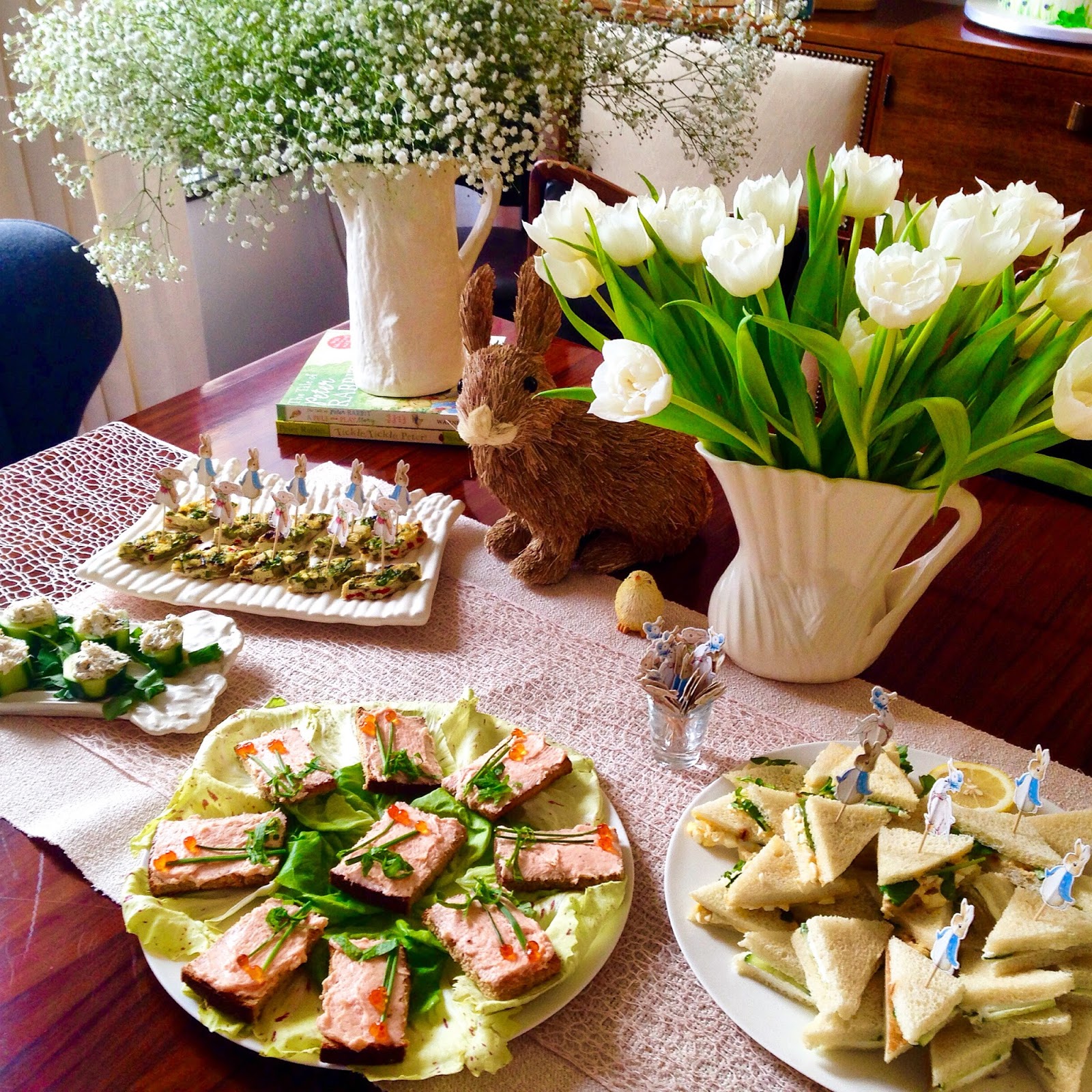
We catered a lovely baby shower luncheon, with a Peter Rabbit theme -- perfect for an early springtime afternoon with the ladies.
Baby carrot cakes were on-theme and the perfect bite for those with a sweet tooth.
And mini strawberry-rhubarb pies were an indulgence that most party-goers couldn't resist!


We catered the seemingly impossible: a Passover Seder and surprise birthday party for 30 people in a small, newly renovated, unoccupied apartment (with a kitchen that was installed just hours before the event!)

The seder had influences both classic Ashkenazi (brisket) and Mediterranean (Italian rosemary and garlic-stuffed turkey breast in a white wine sauce)...

...as well as Sephardic sides like fattoush made with matzoh instead of pita bread, and Moroccan-spiced potato salad with green olives, preserved lemon, and sumac...


...Plus desserts that included my famous flourless chocolate cake with fresh strawberry sauce, flourless apple tart, and biscotti and macarons.


It was also a great year for Blu Aubergine and fun pop-ups. We worked with No Satar/Air Circulation Studios to create a friendly, relaxed Roman Easter-themed feast!


Platters of Rigatoni all'amatriciana
Risotto with asparagus, parmigiano, and crispy prosciutto


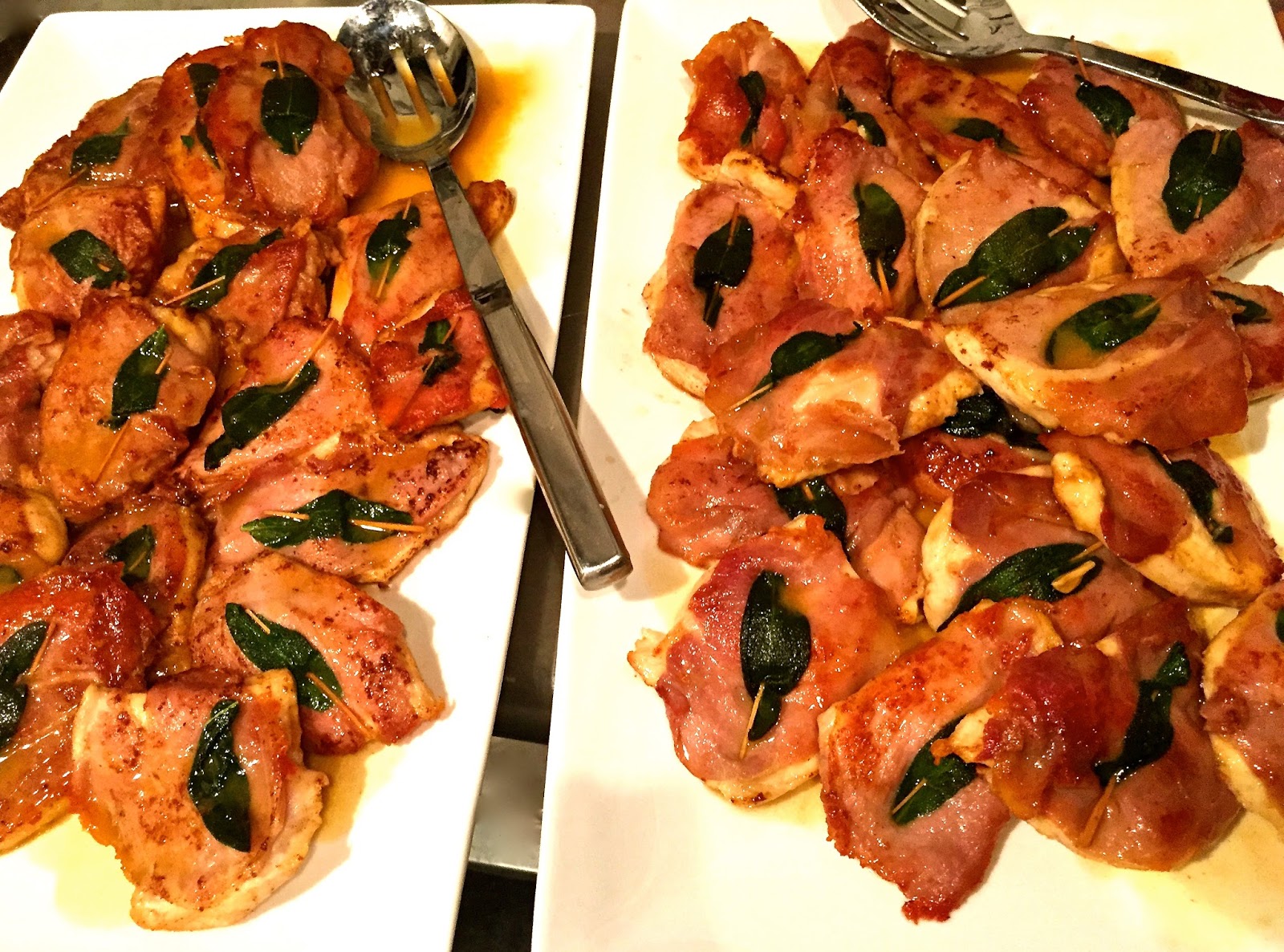
And classic saltimbocca alla romana were among the offerings...


Penthouse birthday bash on the Bowery for 75 people.
My culinary contribution to my parents' 50th wedding anniversary party in a south Florida restaurant: the cake! I decided on a family favorite, called a shadow cake: 4 layers of chocolate and golden cakes with chocolate buttercream, topped with white buttercream and chocolate ganache to cover (and a golden heart on top, for the 50th goolden anniversary, of course!).  
 Another amazing pop-up I did was in conjunction with Filigree Suppers, and the theme was famous women in culture. Each course was inspired by a fabulous female, from Dorothy Parker to Josephine Baker, Georgia O'Keeffe to Julia Child, Chanel to Pavlova. It was a wonderful evening!


Southwestern sunset-hued salads, in celebration of Georgia O'Keeffee

Deconstructed Boeuf Bourguignon, in honor of Julia Child. And a seared scallop on squid ink couscous, with pickled cauliflower and preserved lemon sauce, in salute to Josephine Baker.


A sweet ending: Pavlovas, the meringue, cream, and fruit dessert created in honor of the ballerina.

Holiday season highlights included a southern-themed holiday dinner party in a 30,000 square foot artist's studio on the Brooklyn waterfront...


The table was gorgeous and the food, including creole shrimp, sweet potato casserole with caramelized onions and goat cheese, roasted pork loin with peach-cranberry mostarda, and cajun brussels sprouts and cabbage slaw, exuded southern charm.
 
There were other holiday parties, of course: cocktail gatherings downtown and uptown...with brie en croute, drizzled honey, nuts and dried fruit, smoked salmon with horseradish cream on endive leaves... 
The sweet ending to the year? Mini sweet potato cupcakes with maple buttercream...

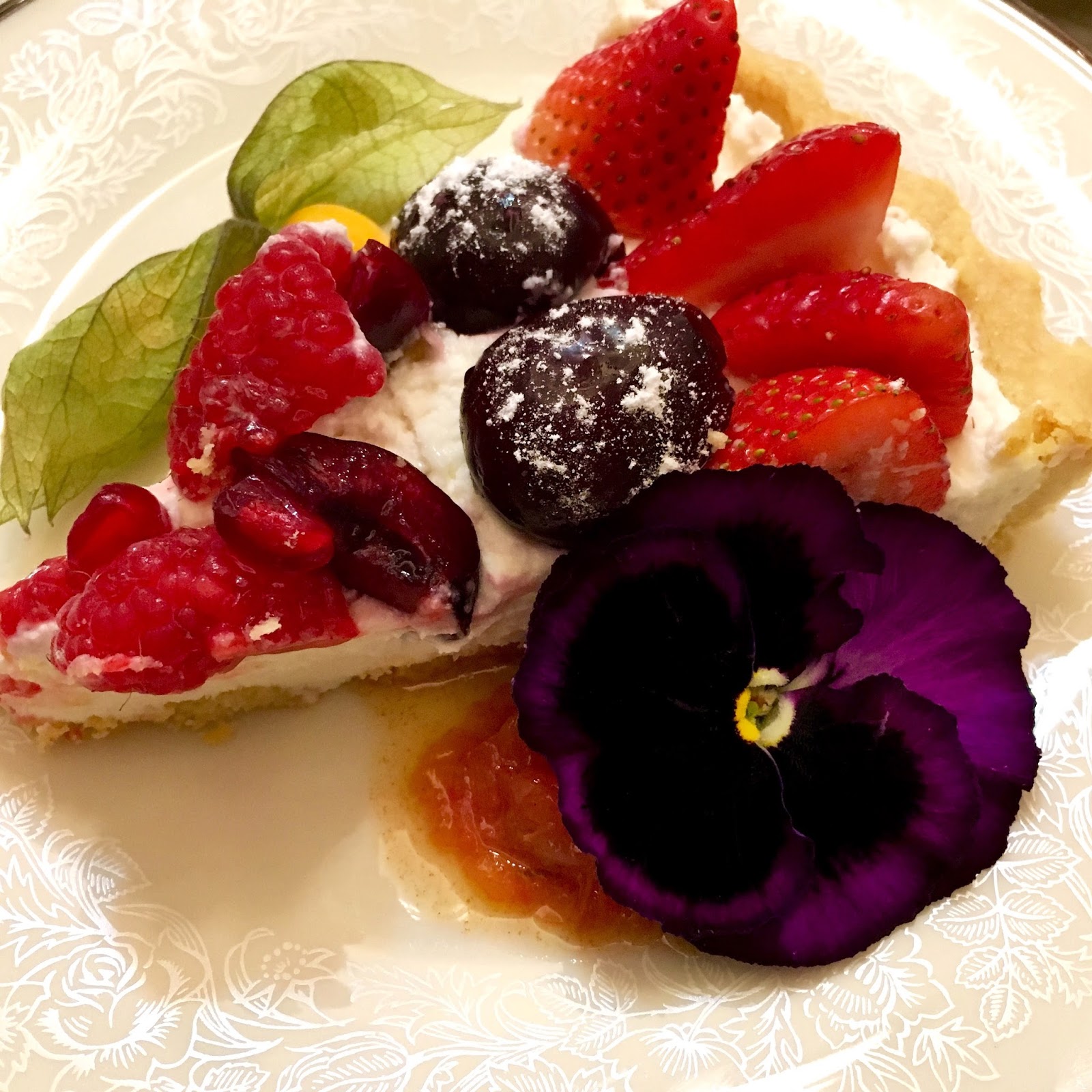
Red fruit tart with mascarpone-ginger cream...whole...


And in slices, with a spiced citrus sauce....


And a yule log, of course, to end the year on a festive holiday note!
 

Wednesday, December 23, 2015

SEASONAL INGREDIENT: Cranberries

I've always loved the taste of cranberries. At the age of 6, I was a precocious little thing, turning my nose up at orange juice (what kid doesn't like OJ?) and requesting cranberry juice of my inevitably surprised servers at diners and delis everywhere. Our family vacation destination each August for my entire childhood was Cape Cod, and I think I especially loved our time there because cranberry products were everywhere: cranberry juice was de rigeur at pancake houses all along the Massachusetts coast, and cranberry fudge was a local delicacy we could really only find on the Cape. And speaking of Cape Cod, when I got older (though let's be clear, not old enough), cranberry juice was my mixer of choice with vodka, for a Cape Cod or a Sea Breeze.
Then, a few years after I became of legal drinking age, Sex and the City hit New York and the world, and you can bet I was slugging down Cosmopolitans in 1999! I even brought the drink to Rome, where I taught bartender friends how to make the perfect Cosmo -- though it was a challenge at the time. You had to really hunt to find two of the key ingredients: cranberry juice and limes (times have really changed in Rome since then -- I like to think I had a hand in the availability of cranberries and limes thanks to my persistent bugging of market owners all over Rome's center!).

It's back in America where cranberries have a real history. They're a perennial holiday favorite, starting off the season with cranberry sauce at Thanksgiving -- and they've been around for centuries. In the 1672 book New England Rarities Discovered, cranberries are described as a "sauce for the Pilgrims, cranberry or bearberry" (bearberry because bears ate the berries)..."that grows in salt marshes that are overgrown with moss. The berries are of a pale yellow color, afterwards red, as big as a cherry...with sower [sic] astringent taste...They are excellent against the Scurvy...The Indians and English use them mush, boyling [sic] them with sugar for sauce to eat with their meat..." And so not much has changed since then. The classic sauce is wonderful -- simply the berries cooked with sugar until they burst. I sometimes like to add orange zest and a little port to add a sophisticated touch to my sauce, but for the most part I like the cranberries to speak for themselves. 


In 1787, James Madison wrote to Thomas Jefferson while he was stationed in France, asking for background information on constitutional government to use at the Constitutional Convention. Jefferson obliged, sending Madison several books on the subject and asked in return for distinctly American gifts that he missed (foodie that Jefferson was): apples, pecans, and yes, cranberries.
In the U.S., Wisconsin is the leading producer of cranberries, with over half of American production. And yes, Massachusetts is number two. My native New Jersey is number three in the country (making NJ not just the garden state, but also the bog state, apparently!). Small volume production occurs in Argentina, Chile, and the Netherlands, in the "old world." 1816 marked the first commercially grown cranberries in the States in East Dennis, Massachusetts on Cape Cod. When cultivated, cranberries are grown on low trailing vines atop great sandy bogs.

Nutritionally speaking? Raw cranberries have plenty of vitamin C, dietary fiber, and the essential mineral manganese. They're also a source of polyphenols, currently under active research for their cardiovascular benefits, their cancer-fighting agents, and their capacity to bolster the immune system. Cranberries have been valued for decades for their ability to help prevent and treat urinary tract infections. Recent studies have also suggested that this powerful berry may promote gastrointestinal and oral health: its phytonutrients are effective in lowering unwanted inflammation, and this extends specifically to the stomach, colon, and the mouth and gums. This miraculous little native American berry may even help aid in recovery from stroke, and lower LDL and raise HDL (good) cholesterol. Clearly, the cranberry packs a powerful, healthful punch!

So, let's discuss cranberries in the present tense. They're easy to ingest through juice (organic, sugar-free juice is best -- cut with a little seltzer, it can be a very refreshing thirst-quencher). They're a natural accompaniment to holiday meals in the form of cranberry sauce. And they're an excellent mixer in cocktails, particularly for the holidays: the juice's bright garnet color adds a tart, festive dimension to drinks and punches. But there are so many great different ways to utilize these healthy red berries: they're an excellent marinade or accompaniment to grilled meats and roasts throughout the seasons. Dried, they're excellent in salads and with cheeses (I always add dried cranberries to the mix to top off my famous brie en croute, a puff pastry-wrapped wheel of brie served with crusty breads and topped with various nuts, dried fruits, and honey -- a winter party favorite). I even add the berries to my beautiful, red-and-green holiday brittle, using shelled pistachios and dried cranberries as the chewy, crunchy bright spots in the caramelized sweetness of the brittle itself. What's most important? Get creative! Use cranberries where you might have used raisins, cherries, pomegranate, figs, nuts, marmalade, maple syrup, orange or apple juice...the possibilities are practically endless. I've known since the age of 6 that cranberries are delicious -- and now I know, we know, that they're also a smart food choice. Eat, drink, and be berry!