Friday, February 21, 2014

RESTAURANT REVIEW: Il Santo Bevitore, Firenze, ITALY

In many ways, I feel romana (Roman) at heart. Like many Romans, I certainly adore eating out in the Eternal City, always a convivial and interesting social experience. But I cut my Italian denti (teeth) in Firenze (Florence, in English), as a college student studying abroad. And though I'm a huge supporter of all that Rome has to offer, sometimes I just have to go Tuscan. 

In comparing the restaurants on offer in the two cities, the overall dining scene in Firenze seems much more refined to me. I'm not discussing high-end restaurants, which are a category unto themselves. But for me, in the Tuscan capitol, the classic trattoria feels more cozy and inviting. The bars are more pleasant places to sip an espresso or grab a panino. And the mid-level restaurant's menu is more varied and accomplished, the staff more personable than the brusque Roman waiters and proprietors, the lighting a touch dimmer and more atmospheric. So it was no surprise to me that I found Il Santo Bevitore in my beloved Oltrarno section of town (the "other side" of the Arno River -- the slightly alternative side of town that most European cities have...think Left Bank in Paris or Trastevere in Rome). And I found it to be one of those exceptional mid-range spots for which Florence is renowned.

I've been to Il Santo Bevitore in smoldering summer weather, and I've been here in cold, wet winter. And though most Italian cities are preferable when you can soak in the sun by day and linger in the piazzas by night, I'll admit that I love Florence, and Tuscany in general, in the cooler months of the year. The food here is so hearty that being somewhere cozy and indoors, with dark wood furniture and candlelight and a warm hearth going (oftentimes used for searing enormous Tuscan steaks and slow-cooking cannellini beans), just feels right. Which is why I especially loved Il Santo Bevitore when I returned this January.
The place is sprawling, and hopping, and you're immediately greeted by a friendly face -- in fact, the restaurant is run by a young team of men and women who excel at warm service (another thing often missing in Rome). The place is usually packed, though waiting is never an unhappy circumstance as there are seats at the bar here, where you can sip a prosecco and watch the barmen slice prosciutto on the antique meat slicer, or you can nip out for a drink at the owners' enoteca next door. 


Once you're seated, you'll need some time to peruse the expansive menu, as there are lots of antipasti and "specialties" that can be eaten as starters or mains. In fact, cobbling together a meal here is a little different than at your classic trattoria, as the structure of antipasto-primo-secondo is a little more fluid. Basically, just select what tempts your palate, and the servers will help you navigate. The same could be said for the wine list, which offers the classics, plus a lot of lesser-known labels, and variations on a theme (the theme? Tuscan reds). Server suggestions are a great help, and you can find some unusual blends and interesting Super Tuscans along with the classic Chiantis. I always enjoy beginning a meal with a glass of prosecco or spumante, which opens up the palate and the appetite. Then, once I've selected the food I'll be eating, I select a wine that will compliment the courses, and not vice-versa. I've always found it strange when, in the States, servers ask you for your wine order right off the bat, before you've even had a chance to look at the cuisine on offer. Servers in Italy don't even normally take your wine order until you've had a chance to consider the menu. A really interesting food-wine pairing is one of the greatest pleasures in life, and opens you up to wines you may never have tried otherwise.


So, then, what to eat? Like most ristoranti in Italy, the menu here changes according to the season. There are Tuscan specialties aplenty, including a riff on the most ubiquitous antipasto in Tuscany: chicken liver crostini. Here, the chicken livers are whipped until smooth and formed into a luscious terrine, which is served warm in a fortified wine sauce, the aroma of rosemary wafting from the plate. Smear a bit on the accompanying brioche toast points for some of the best cool weather comfort food ever imagined. Here too, the classic Tuscan bread soups are on the menu: pappa al pomodoro in summer, when tomatoes are at their finest, and ribollita in winter, when Tuscan kale and hearty white beans add heft to the bread-thickened minestrone. Both are perfectly, classically delicious, and are improved with a glug of green Tuscan olive oil drizzled on top. 

The kitchen does, however, look to outside the region for inspiration, as well. To wit: a gorgeous plate of fresh riccioli pasta with a tomato-'nduja (spicy soft Calabrese sausage) sauce and shaved aged pecorino cheese. It's incredibly more-ish with its unctuous, stinging bite. Another specialty is the burrata -- a rich, cream-filled mozzarella from the southern Puglia region, here served on sauteed spinach (very Florentine) and drizzled with pesto (classically Ligurian).
And bringing various regions together on the plate is the summer offering of borage (a green vegetal herb) ravioli on a burrata sauce with marinated leeks, topped with shaved Sardinian bottarga (cured mullet roe). This dish is a wonderful balancing act of creamy, verdant, briny, and acidic -- and unlike anything you'd find in your average trattoria. Another interesting specialty is the vegetable tortino -- basically a crustless tart, somewhere between a souffle' and a vegetable frittata, done seasonally to highlight a single ingredient. This January it was a tortino di cardone, or cardoon tortino, which is just as Tuscan as it is Sicilian or Piemontese.The vegetable looks like a big, craggy stalk of celery, but tastes more like an artichoke (they're members of the same vegetable family). The tortino was topped with red wild lettuce and a  piece of frica (Friulian baked parmigiano crisp) to mirror the taste of the cheese fonduta sauce on which it sits, making this a perfect warming winter veggie dish.

Secondi include a "crispy" octopus on a puree' of celeriac and sunchokes, with hazelnuts and turnips. The octopus was not, in fact, crispy, and could have used some sauce to improve a dish that tended toward dry. But the elements themselves were tasty and the flavor combination quite interesting. Better, and certainly more Tuscan in feel, was the roasted duck leg.
Wild fowl and game and wild boar are what leap to mind when I reflect on great cool weather Tuscan food, and this duck dish fits the bill. It's braised and roasted and served with a jus with red wine added, and accompanied by a foie gras mousse and sweet-sour radicchio -- a great foil which cuts the richness of the dish. And of course, when all of these are accompanied by interesting wines paired well, the whole experience is elevated.


I'm always so stuffed after eating here that I can barely think about dessert. My theory, however, is that something rich and chocolate-y is always worth trying. If you have room and it's on the menu, try the chocolate mousse: I had it paired with avocado sauce and bruleed bananas on a recent visit. Often in Florence, however, I'll just go for a vin santo, the classic Tuscan dessert wine, amber in color and musty-sweet with notes of dried fruit and toasted nuts. The tradition in many places around town is to serve it with tozzetti, little almond biscotti, though I like the dessert wine on its own as well. It's the perfect way to cap off a great meal at a warm and inviting restaurant in the Oltrarno, this always-interesting and picturesque quarter of the lovely flower of a Renaissance city that is Firenze.

IL SANTO BEVITORE
Via di Santo Spirito 64/66, Firenze, Italy
+39 055 211264
www.ilsantobevitore.com
Open daily 12:30 - 2:30 pm, 7:30 - 11:00 pm (no lunch Sunday)

Thursday, December 5, 2013

RECIPE: Beet and Carrot Latkes: Not Just for Hanukkah

Hanukkah is a time for traditions, but I often think that new twists on old traditions can be the most fun way to celebrate. Latkes are of course the most popular food connected to Hanukkah, but really, they're pretty great any time of year. For festive winter holidays, using root vegetables makes seasonal sense -- and this recipe is a wonderful new way to take beets and carrots out of salads and put them into a starring role in a delicious starter or side dish: Beet and Carrot Latkes.

These latkes don't even require any potatoes to make them work. Their vibrant color makes them perfect for parties and entertaining. And the sweet earthiness of the vegetables make them a great match for exotic spices from North Africa and the Middle East: toss in some cumin or curry or Moroccan spice mix ras-el-hanout to add dimension. Paired with Greek style yogurt or labneh instead of the traditional sour cream, with some torn cilantro leaves on top, these latkes really shine. Enjoy!

BEET AND CARROT LATKES
(Serves 6)

2 cups shredded beets (raw)
2 cups shredded carrots (raw)
1/2 medium-sized onion, shredded on a grater
3 large eggs, lightly beaten
1 cup flour (more or less as needed), to make the mixture the thick but still wet
Salt and pepper to taste
Optional: 1 tsp. cumin, ground coriander, curry, or ras-el-hanout 
Olive oil or vegetable oil for frying (approx 1 cup)
1 cup plain Greek yogurt or labneh
Small bunch of cilantro

- Mix the shredded beets and carrots together, tossing with salt and pepper (and spices, if using) to season. Add the eggs and mix, then add the flour, 1/4 cup at a time, until the mixture holds together on a spoon without running.

- In a frying pan, heat enough oil to coat the bottom of the pan, until shimmering. Add the beet and carrot mixture in heaping spoonfuls to the pan (they should sizzle upon contact with the oil), pressing down on each spoonful to flatten it into pancake form. Fry on first side until golden brown around the edges, 2-3 minutes. Flip. Cook until golden brown on the other side. 

- Remove from pan with a spatula to a paper towel-lined platter or plate, to cool and absorb the grease. Continue this way until all of the mixture is used, adding more oil if necessary. 

- To serve, place the latkes on a platter and top with the yogurt/labneh and cilantro, or put the yogurt in a dish in the middle for guests to help themselves.


Friday, November 1, 2013

RECIPE: Zuppa di Zucca

Pumpkin time!

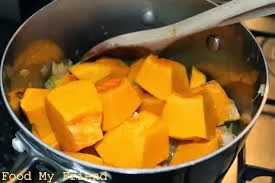
Yesterday was Halloween, today is All Saints' Day, and we're smack in the middle of pumpkin season. Depending on the kind of pumpkin you may have picked -- possibly literally -- you can use more than just its seeds as a snack. Pumpkin soup is a delicious seasonal dish, with a green salad and some crusty multigrain bread for lunch, or for a first course at dinner. The recipe is quite simple. The hardest part is probably peeling and cutting the pumpkin -- you'll need to put a little force into it, as pumpkin flesh is dense, and the outer skin is tough. Once you have the pumpkin cubed, it's pretty straightforward. 

And the dish is so versatile, you can use the basic recipe and tweak it slightly to make a delicious pasta sauce, a puree to go into a risotto, or as a sauce base for protein preparations (Grilled sea bass on pumpkin sauce? Pumpkin seed-crusted chicken with spicy pumpkin sauce? Yes, please!). It's also a great dish for a gorgeous, autumnal presentation. This soup one-ups the clam chowder in a bread bowl: serving pumpkin soup in a pumpkin shell is beautiful, natural, and just makes aesthetic and culinary sense. And finding the adorable serving pumpkins can be half the fun! So follow the recipe below, and with practice, you can modify it to make it your own...and to make pumpkin soup into something other than pumpkin soup. It's a jack (-o-lantern) of all trades!


ZUPPA DI ZUCCA 
(Serves 6-8 people)


3 medium-sized butternut squashes -- or any dense pumpkin variety
2 cloves garlic
8-10 cups vegetable broth
Salt & pepper to taste
Few sprigs of fresh thyme, sage, or basil
Spices to taste: garam masala, or smoked paprika, or curry powder

-Peel the butternut squash, slice in half, scoop out the seeds. 


- Cut into 1.5 to 2-inch dice.


-Place the butternut squash cubes in a large pot and cover with the vegetable stock. Add the garlic and the herbs and a dash of salt, and cover.

- Boil squash until tender but not falling apart, about 30 minutes or so.

- Remove from heat and let cool down a bit. Remove the herb sprigs.


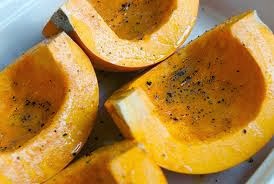
- Alternatively, you could roast the pumpkin cubes in a 375 degree oven, tossed with a glug of olive oil and some salt and pepper. This will make the flavor a bit more concentrated.


- Using an immersion blender, or working in batches with a food processor, puree the squash until smooth. Add salt and pepper to taste, along with other spices if desired. 


- Top with chopped fresh herbs (thyme, basil, sage, or parsley, to taste) and serve. 

*Special touch: I like to drizzle a balsamic vinegar reduction over top, as in the photo above -- it gives some extra pop and a sweet-sour finish to the soup that cuts the rich creaminess of the pumpkin. Very Modenese (Italy)!


Thursday, October 24, 2013

ESCAPES: Tel Aviv, White Hot. Part 2: Center City North and the Beaches

In my first blog post about Tel Aviv, I discussed the wonderful energy of the city on the Mediterranean, and introduced readers to the street foods of Israel -- a very important part of the food culture in this wonderful country. This time around, I'll delve deeper into the stellar dining experiences in town, from cute cafes to elegant culinary temples, which are such an important part of the always-energized nightlife scene in TLV...and why it's one of the hottest destinations on the planet right now.It's a city of about 400,000, but the vibrancy of the urban setting and the cultural richness paired with the beachside setting...well, it makes it all feel like a cosmopolitan center of 4 million. 


To wit, there is a vast assortment of options around town, and in this installment I'll focus on dining along the beaches, and the city center and north towards the Port (Namal). The area comprises a large part of Tel Aviv, extending down from the Namal and the north of the city, near the Yarkon River, to Jabotinsky Street, and east to the Tel Aviv Center and the Tel Aviv Museum of Art, down to Dizengoff Square, and finally to Sheinkin Street -- and stretching all the way west to Ha Yarkon and the Tayelet, the beachside promenade pictured here. (I am always reminded of Rio de Janeiro's beachside promenade, with its tiles in a similar wave pattern and the city abutting the ocean...but I digress). 


Obviously, this is a large swath of the city, and I don't have enough room to include all of my favorite spots. But I will include as many must-try locales as possible in one posting. And keep in mind that I'll offer a more detailed breakdown of two of the city's top eateries, Messa and Raphael, in a separate restaurant review post.


Starting from the north, on the water, we have the rebuilt, spiffed-up Port area known as the Namal, and its waterside boardwalk, seemingly sculpted out of a sandy-colored wood, undulating (to the delight of many a skateboarder) to blend with the surroundings. Warehouses and industrial structures have become restaurants and bars, boutiques and food markets, and the area is now busy morning through late night. Mul Yam is a seafood-lover's spot, the name a pun on its translation, "across the sea" in Hebrew, and the word for "mussel" in French (moules, pronounced "mool") and "yum," as in delicious. The food is incredibly refined and very European, for the most part -- and outrageously expensive. For a much more casual spot, there's Shalvata, near Hangar 25, and for market-to-table (literally), try Kitchen Market, hard by the Port's food market.  


Just inland from Hilton Beach, on major thoroughfare Ben Yehuda Street, chef Sharon (male) Cohen runs a casual eatery and bar called Shila. I stayed in an apartment practically upstairs from this place for close to a week, and it was always busy, always full of a young (but not too young) clientele, day and night. The atmosphere is lively and friendly, much like the staff, and the food is genuinely really good. A perennial favorite on the menu is a seasoned fish tartare tossed with pistachio oil and fresh mint. It's served wrapped in a beet carpaccio sheath, alongside a mache salad and finished with a yogurt drizzle and pistachios. This would make a wonderful lunch in and of itself, paired with the highly addictive parmigiano bread twists they serve with a red pepper butter (carb-averse patrons, you've been forewarned. Resistance is futile!). Together with a glass of crisp Israeli white wine from the refined list, it's a perfect hot weather meal. But there's so much else to explore on the menu. 
A good choice for a follow-up -- and since you're only a block or two from the Mediterranean, after all -- is the Mediterranean sea bass. The iteration I ordered was perfectly cooked, all crispy skin and flaky white flesh, and served on a bed of shaved fennel and fresh greens, all atop a variation on Romesco sauce. Though I was completely satiated by the end of the meal, I wasn't uncomfortably full and the food never felt heavy. This is the mark of a restaurant that becomes a neighborhood favorite: you leave satisfied but comfortable. You don't feel you've overpaid or overeaten. You can even head back to the beach for a little afternoon sun.


Raphael, located next door to the Dan Hotel on the beach, is a classic top eatery in Tel Aviv. I will write a more in-depth review in a future post, but suffice it to say that chef Raphi Cohen merges superb classic French technique with Israeli and Moroccan ingredients to create a cuisine that is refined, local, and elegantly-presented. The drumfish fillet, pictured, with olives, roasted tomatoes, and herbs is a perfect example of this homespun-to-elegant cooking style. 
At Messa, across town to the east, chef Moshe Aviv is creating art on a plate, with influences from all around the Mediterranean, Middle East, and North Africa. The setting is a gorgeous, low-lit white room, and the combined effect of the surroundings, the food, and the sexy servers presenting it all makes the diner feel beautiful, as well. There are plenty of luxe offerings, from foie gras to seared tuna to sweetbreads to truffles to more foie gras. But the ingredients are treated with respect, and though Chef Aviv is clearly a risk-taker, he's not creating his menu for the sake of showmanship. The food is inarguably delicious -- expensive, artful, and delicious.


Another top-notch offering further south along the beach is the beautiful Herbert Samuel -- a spot at once international and very Tel Aviv. The restaurant is part of the Alma Hotel, and its design is airy and modern, on two floors (upstairs is the open kitchen, for voyeur-diners), at the south end of Ha-Yarkon, across from the beach. You can sit at tables with windows looking onto the Mediterranean, or you can eat and drink  at the large square bar in the center of the downstairs dining room. It's a social spot and always lively with personable bartender-servers. Many of the plates are designed to be shared, and this allows a group to order a variety of dishes to taste the Mediterranean and greenmarket-inspired fare.


We started with a grouper tartare, deliciously seasoned and beautifully presented on a bed of eggplant pureewith a few slicks of inky charred eggplant sauce along the plate's rim. We also, upon recommendation of our server, tried the "famous" tomato salad. I was worried about tomatoes possibly not being in season (though Israel grows some wonderful greenhouse produce), but it did not disappoint. The tomatoes -- various heirloom varieties from sun gold to crimson to greenish-black -- were incredibly flavorful. These were tossed with various microgreens, thinly-sliced red onion, scallions, pistachios, and the Israeli feta-style cheese called tzfatit. Coming from the Italian school of thought on food -- that good food is simple, high quality, and balanced -- I was won over by this salad. I finished it and immediately craved another.
Instead, we moved on to a light main course of octopus, shrimp, and artichokes on a delicious labneh-cream dressing and tossed with all kinds of goodies from land and sea, including roasted potatoes and sea beans (one of my favorite vegetables on the planet). This was such an interesting juxtaposition of flavors in one course, and presented as if on an artist's palette, a slab of gray slate with a slather of garlicky yogurt sauce topped with an assortment of colorful delicacies. The dessert menu was too tempting to pass over, so we indulged in the churros and chocolate sauce with vanilla and chocolate gelato on the side. All was accompanied by another exceptional bottle of Israeli white wine -- a crisp sauvignon blanc, this time around.


From high-brow to egalitarian fare, center city Tel Aviv even offers a fun burger-and-schnitzel joint, on lovely Rothschild Boulevard: Moses. This is a fun place, ranging from family-friendly lunch spot to a surprisingly hopping bar and date spot later in the day. And I would be remiss in my reporting if I didn't mention Benedict, the small chain of restaurants open 24/7, specializing in breakfast foods from around the world. And one cannot leave Israel without having tried shakshuka at least once. This is the Israeli national breakfast dish, and it's savory and delicious. It consists of a base of tomatoes, onions, and peppers stewed together with chili pepper to make a spicy tomato base. Into this stew, the eggs are cracked, basically poaching them in the tomato sauce. There are green versions, made with everything from tomatillos to spinach -- and they're ALL delicious. The version at Benedict is classic, and something I've indulged in more than once...after a night out on the town...at 4 am...with a glass of champagne. As you can see from the photo, the shakshuka comes with delicious bread, eggplant puree, an Israeli salad, and various other sauces. This is good stuff, and all but guarantees you a good night's sleep afterwards, if you want it.


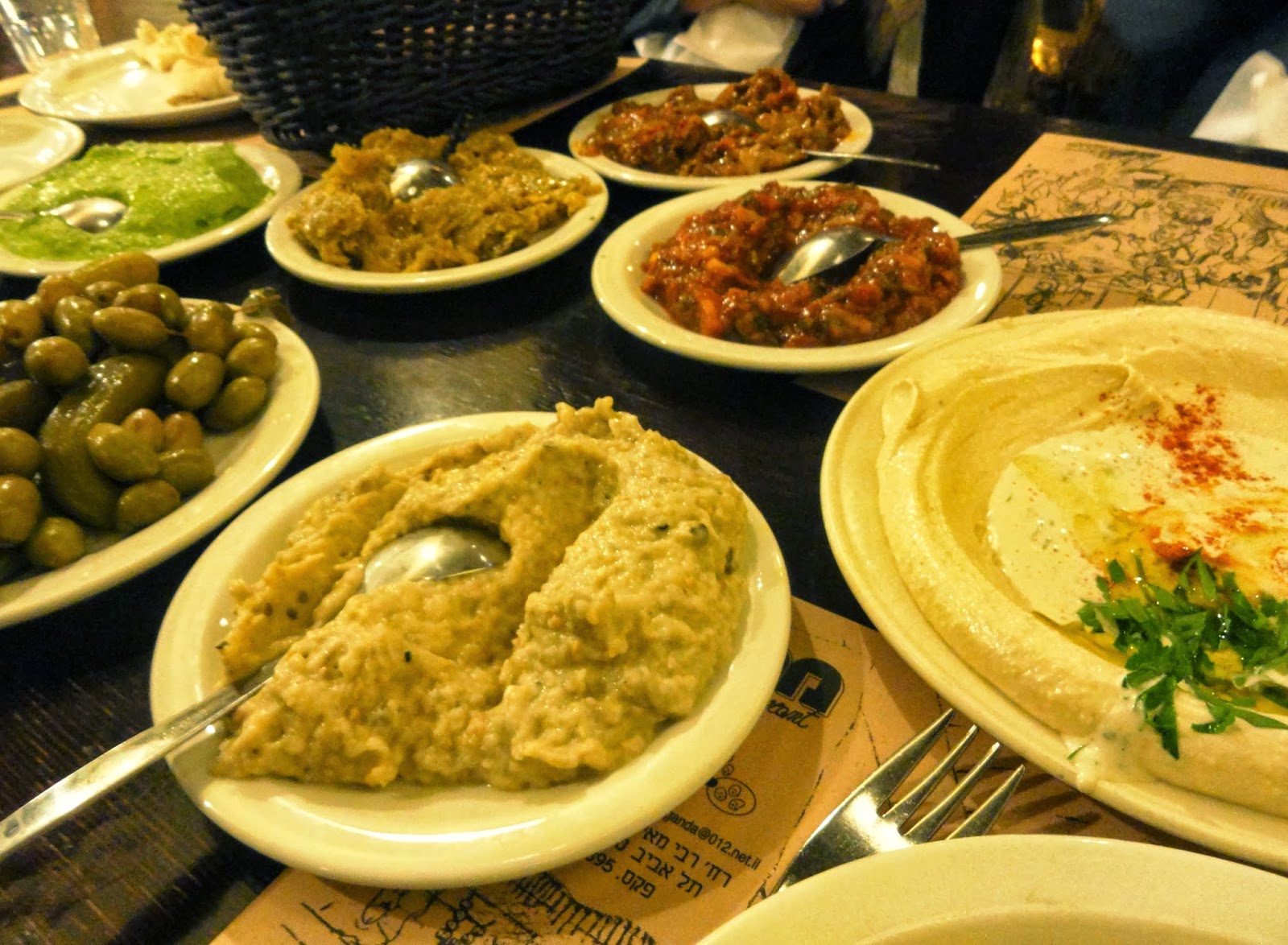
And while I'm on traditional, I have to include one of my favorite kinds of meals to have -- not just in Israel, but in the entire world. Perhaps this is because I've only ever found these restaurants in Israel, so the pleasure of an indulgent meal of traditional Yemenite cuisine is one I look forward to, and a happy but infrequent occasion. The Yemenite neighborhood in Tel Aviv is central and pretty much surrounds the Ha-Carmel market, a bustling sprawl in the city's heart. One restaurant where I enjoyed this food is an old reliable called Maganda. There's an interesting mix of diners: locals and kosher Orthodox Jews and tourists all enjoy the festive, casual atmosphere here. Yemenite food is famous for its variety of mezze (starters) -- a selection of dips and salads and pickled vegetables, including the omnipresent hummus, baba ghannouj, and pickled cucumbers and olives. There's also a tomato-based eggplant salad, garlicky hummus made neon green with cilantro, a spicy pepper dip, and the list goes on. It's best to just try everything with an open mind, and a warm pita in hand. For main courses, you have grilled whole fish, roasted chicken, and various delicious kebabs over rice from which to choose. This is a place where you can fill up quickly on the mezze -- not a mistake, since these can be the highlight of the meal -- but you should try to leave room for a main course. The variety of flavors really satisfies.


Lastly, I must mention a restaurant that started in Ramat Hasharon, north of Tel Aviv, and opened a second location in the city center which has, as I understand it, closed its doors. It's a shame because the food and the atmosphere were great, and great fun. But the original still exists, so it's worth taking a cab ride to try the homemade kosher Persian cuisine of restaurant EdnaHere you'll find a variety of food well beyond the Israeli staples. Items like Persian stuffed vine leaves are rich and flavorful, and like many items in the Persian repertoire, incorporates a sweet-sour flavor profile that lends Persian cuisine such dimension.   
The main courses run the gamut from "regular" restaurant fare (steak, etc.) to Persian specialties like the beef with eggplant stew, or the meatballs with dried fruit and beets, tomato, and okra. These are definitely hearty meals-in-a-bowl, served with an addictive onion bread to sop up the liquid...but the local clientele, and presumably those in Iran who eat this way often, are not fazed by high humidity or heat. They eat here year-round, and outside, and happily so. The food is incredibly delicious and flavorful -- like you're eating a meal with your best friend whose grandmother happens to be an amazing Persian cook. This food is worth discovering.


Mul Yam (in the Port), Hangar 24, 03/546.9920

Shalvata (in the Port), near Hangar 25, 03/544.1279

Kitchen Market (in the Port), Hangar 12, 03/544.6669

Raphael (next door to the Dan Tel Aviv), 87 Hayarkon St., 03/522.6464

Shila, 182 Ben Yehuda St., 03/522.1224


Messa, 19 Ha'arbaa St., 03/685.8001

Moses, 35 Rothschild Blvd., 03/566.4949

Herbert Samuel, 6 Koifman Street, 03/516.6516

Benedict, Ben Yehuda 171, 03/544.0345; 29 Rothschild Blvd. 03/686.8657

Maganda, 26 Rabbi Meir St., 03/517.9990

Edna, 3 Trumpeldor Street, Ramat Hasharon, 053/809.4838

Wednesday, October 2, 2013

QUICK BITE: Salade Nicoise

It's the perfect encapsulation of the Cote d'Azur. It's sunshine and the south of France on a plate: The Salade Niçoise, or Niçoise Salad.

This is what is known as a salade composée (composed salad), in which the ingredients are not mixed, but rather plated in lines or groupings of ingredient, to be mixed at will by the person eating the dish. (The Cobb salad is another classic example of a composed salad). This is also great for those who want to serve the salad family-style, to a group. It is a meal in and of itself, with briny protein and fresh vegetables brought together by a high-quality olive oil of the variety commonly found in Provence. There's discussion over exactly what the classic Salade Niçoise includes. The necessary ingredients? Tomatoes, hard boiled eggs, olives, and anchovies and/or tuna. Some say forego the haricot verts, the thin French string beans that should bend and snap in your mouth. Some claim the boiled potatoes -- or in fact, any cooked components -- do not belong in a true Niçoise. There are purists who believe that the salad can contain anchovies OR tuna, but never both. And most claim that the tuna cannot be fresh tuna steak, as has become popular in this time of sushi-grade yellowfin. Some people add red peppers, or artichokes, or radishes. I've seen asparagus, capers, green peas, hearts of palm, and spring onions.


Normally I'm a purist. And since Nice and the area was ruled by the Italians until relatively recently (probably why I love the food so much), I can filter much of what should go in the dish through an Italian culinary lens. Which means, despite protestations otherwise, I say include what's fresh and good, and what works! Genova is just a few miles across the azure waters of the Med from Nice, and they classically use potatoes and green beans in their most classic version of pasta con pesto alla genovese, so I say they make sense in the Niçoise as well. Even some basil works. Radishes, a very French ingredient, seem to work well and popped up in many versions I enjoyed in Nice. Same with artichokes. I much prefer a delicious, tiny cherry or grape tomato to slices of tasteless "salad" tomatoes, but that's just me.

I would even go so far as to say that if you have access to really beautiful fresh tuna steaks, by all means use them -- cooked properly, of course: seared on the outside, ruby-pink in the middle. Still, Italians are known for their excellent tuna, jarred and preserved in olive oil: miles away from Starkist canned nothingness in water, this. And without question, we know that the olives to use are the petite, sweet black olives known as, what else? Niçoise olives. As for dressing, some would claim to just use a couple of glugs of local olive oil. I prefer to make my dressing as French as can be, with some chopped shallots and a spoonful of dijon mustard to start with, some fleur de sel, and a bit of either red wine or champagne vinegar, or balsamic. Which brings us to the olive oil.


If you're lucky enough to actually prepare your Salade Niçoise in Nice, I highly recommend heading to the Alziari store on 14 Rue Saint-Francois de Paule (phone +33 4 93 62 94 03). You'd probably recognize the olive oil can before you'd recognize the name (Italian as it is): the un-mistakable blue checked round metal canister, pictured here. You could even pick up some great milled soaps made with olive oil, or try some of their infused oils. I like to stick to the classic canister, however. It brightens my kitchen and reminds me of the almost surreal blue of the waters of Nice, and looking out upon them as I ate my perfect Salade Niçoise...whatever version I was served on that particular, glorious day.


Monday, September 9, 2013

SEASONAL FOOD: Blackberries

One autumn in the early aughts, I headed down to Charlottesville, Virginia to see a football game at my alma mater, UVa. I saw many old friends that weekend and one in particular, a guy from Mobile, Alabama, was asking me detailed questions about living in Rome, and my everyday life in Italy. As we walked from the stadium into town for drinks, I remember him positing this question to me: "Do y'all have blackberries in Italy?" As a chef, my first thought is of course food. So my answer was "Well yes. We have blackberries, raspberries, strawberries -- delicious wild berries unlike what you find in supermarkets over here." I remember he looked at me with his head half-cocked, trying to read my expression to see if I was joking, and understanding that I was not, he simply walked ahead of me and started a conversation with someone else. I was confused by the exchange, until hours later, when I realized he was asking me about smart phone technology in Italy, not produce. Oops.


But the truth of the matter is, even today, someone says "blackberry" and I think immediately of the luscious fruit. I have fond memories of picking blackberries on Ponza, after swimming in the piscine naturali ("natural pools") created by funky rock formations on the northwestern coast of the island. The brambly bushes lined the road above the pools, and the berries were our inky reward after the steep climb up the dusty foot path.

In fact, these delicious blackberries, fragrant from the late summer sun, are not berries at all. They're technically, botanically, considered an aggregate fruit: composed of small drupulets, the blackberry is a collection of seeds derived from the plant's flower, enclosed by flesh and an outer membrane. But that's just a technicality. The good news? Blackberries contain numerous antioxidants, phytochemicals including the all-important polyphenols, flavonoids, salicylic and ellagic acids (which fight against cancer), and dietary fiber. A recent health research report placed blackberries at the top of more than a thousand antioxidant-containing foods consumed in the U.S. They're also high in Vitamins C, K, and the essential mineral manganese.


As a fruit, blackberries are versatile in both sweet and savory dishes. They're great as is, tossed in a salad like the one pictured, with freekah (a Middle Eastern grain), mixed greens, herbs, and a blackberry vinaigrette. Speaking of that vinaigrette, you can infuse vinegars with blackberries, strain the fruit, and have the flavor for weeks after the season is over. You can also pickle the berries in a light brine with herbs and use them in salads or with rich meat dishes, into the fall. I love duck dishes with fruits and berries. Blackberries pair really well with figs in savory dishes, and can round out your September summer-into-fall cooking, deliciously.

Blackberry upside-down cake with
blackberry-white chocolate mousse
But most of all, I love blackberries for dessert. They're the perfect sweet ending -- maybe even to a meal containing blackberries throughout every course. A simple bowl of blackberries with fresh, organic whipped cream is a beautiful thing. A favorite of mine in recent years is the blackberry-bottom cake, at left. I paired it with a blackberry-white chocolate mousse and blackberry gastrique, with fresh blackberries and mint.
Coconut tapioca pudding with
blackberry-buttermilk ice cream

Blackberry cheesecake
Another favorite iteration is my coconut-tapioca pudding with blackberry-buttermilk ice cream and fresh blackberries, with a dusting of dried coconut flakes. Obviously, blackberries pair well with dairy: the creaminess of the milk-based products is a great foil for the dark, bright floral and sour fruit notes of the blackberry. Blackberry panna cotta and creme brulee are great ways to transform the blackberry into dessert, and beautiful too -- the purple-black becomes anything from bright royal purple to a pale lilac when paired with dairy. One of my all-time favorite blackberry desserts I made was a blackberry cheesecake, beautiful in its simplicity, and again pairing cream cheese and sour cream with the berry (though ricotta and mascarpone would have been just as delicious, with an Italian bent). I mixed a blackberry puree into the cheesecake base, and topped the cake with a sweetened sour cream spread and more fresh blackberries and some just-picked mint leaves. Rustic perfection.

And now, since we just lost the great Irish poet Seamus Heaney on August 30th, I wanted to share one of my favorite poems of his. The first line here, of course is "Late August" -- but since the summer took its sweet time getting here this year, the season is extended into September, and we're the beneficiaries of an Indian Summer and lovely weather in which to enjoy our blackberries a little bit longer.

Blackberry-Picking
Late August, given heavy rain and sun
For a full week, the blackberries would ripen.
At first, just one, a glossy purple clot
Among others, red, green, hard as a knot.
You ate that first one and its flesh was sweet
Like thickened wine: summer's blood was in it
Leaving stains upon the tongue and lust for
Picking. Then red ones inked up and that hunger
Sent us out with milk cans, pea tins, jam-pots
Where briars scratched and wet grass bleached our boots.
Round hayfields, cornfields and potato-drills
We trekked and picked until the cans were full
Until the tinkling bottom had been covered
With green ones, and on top big dark blobs burned
Like a plate of eyes. Our hands were peppered
With thorn pricks, our palms sticky as Bluebeard's.
We hoarded the fresh berries in the byre.
But when the bath was filled we found a fur,
A rat-grey fungus, glutting on our cache.
The juice was stinking too. Once off the bush
The fruit fermented, the sweet flesh would turn sour.
I always felt like crying. It wasn't fair
That all the lovely canfuls smelt of rot.
Each year I hoped they'd keep, knew they would not.

- Seamus Heaney