Sunday, May 13, 2012

RECIPE: Festa della Mamma & Veggie Frittata

Auguri, mamme! Yes, it's Mother's Day in America, as well as many other countries around the globe. And while mothers are revered the world over, Italy is known for having huge ties to, and love for, its mothers. Perhaps it all started with the Madonna? A quick pondering of the Italian vernacular reveals that sayings like "mamma mia!" and "Madonna!" are still very much in everyday use, and that "mammone" are a very real Italian phenomenon -- "mamma's boys" who live at home well into their forties while their mothers continue to cook their meals and do their laundry. I'll hold my tongue on the culture of men and their mothers in Italy, and simply offer up the recipe below...

It's a vegetable frittata, one of many simple-but-satisfying meals that's vegetarian-friendly, and can be prepared for a brunch just as easily as it could for dinner (which is actually when most Italians eat frittate). 

And what could go more perfectly with this easy meal than a "Mammosa": a mother's day version of a mimosa, here made with prosecco instead of champagne, and orange juice (try blood orange juice for a Sicilian twist).

Auguri, mamma!
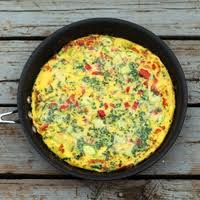

Vegetable Frittata
(for 6 people)

Feel free to use any seasonal vegetables you have on hand in this recipe. It's nice to have a variety so the end result is colorful.
 
Pat of butter
10 eggs
½ cup whole milk
¼ cup parmigiano cheese
2 cups broccoli florets
1 red pepper, cut into strips
2 small onions, thinly sliced
1 TBSP olive oil
Salt and white pepper, to taste

-Par boil the broccoli and red pepper strips and shock in ice water.
-Saute the onions in a pan with a little olive oil, until translucent and lightly browned. Set aside.
-In a bowl, whisk the eggs with the milk, parmigiano cheese,  and a touch of salt and pepper.
-Grease a glass pyrex rectangular pan with the butter, or melt butter in a round frittata pan or cast iron pan.
-Put the vegetables into the pan, and pour the egg mixture on top of them. Mix to get the vegetables evenly spread throughout.
-If cooking in a pan, fluff the eggs over low heat as they cook (like scrambled eggs) and then let them set .
-Place into a 350 degree oven for about 25-35 minutes, until the eggs are set on top and the whole frittata has puffed up a bit.
-Remove from oven and let cool; cut into slices or squares or portion as you like.


Thursday, April 26, 2012

ESCAPES: Caribbean Cool -- St. Lucia, Pt. 1

Ahh, the Caribbean. Warm waters and powdery beaches and penetrating sun. The lilting local patois, the reggae and calypso music. The scent of local spices searing on meat and seafood cooking over makeshift beachside grills. And rum punch -- ohhh, the rum punch. All of this can go to a girl's head...particularly if that's exactly why a girl heads to the Caribbean in the first place.

There are so many gorgeous spots to experience in the Caribbean, but until this past Christmas, I hadn't been down to this part of the world in decades. (Living in Italy allowed me to travel to many places proximate to Europe, but I tended to ignore "The Americas," as it were, during that time). Having worked my tuchus off during the holiday season this year, combined with wanting to be anywhere-but-here for the anniversary of my dear friend's passing, my friend Helen and I decided to escape to somewhere warm and wonderful. Helen was coming in from London so our selection of islands was narrowed according to what Sir Richard Branson had on offer for Virgin Airlines miles-holders. And then it was decided: St. Lucia. 

This lush, verdant island closer to Venezuela than Miami, is nestled north of Barbados and south of Martinique along the southern end of the chain of islands in the Caribbean Sea. Its pedigree is multi-ethnic, and though discovered some time soon after 1492 during the time of the Columbus expedition, St. Lucia's first official European colonizers were the French, in 1643. The island then passed between the French and British 14 times before it fell definitively into British hands in 1814. Much later, in 1979, St. Lucia became an independent state of the Commonwealth of Nations (associated with the UK) -- and they've been celebrating ever since. 

The island's topography is different from so many other Caribbean islands, which can be arid and rocky. St. Lucia is incredibly green and lushly tropical. Its "silhouette" is a very-recognizable pair of volcanic mountains called the Pitons, the triangular forms which also grace the island's national flag. These mountains are scalable, though it can be a tough feat. We preferred to view them from out at sea, where you can get some perspective and see the sinking sun cast shadows across the island.

We also loved taking in the Pitons from the beach at Jalousie between the two peaks, one of the most beautiful spots on the island. The pristine white sand beaches here abut waters that provide great snorkeling and allow a glimpse at local colorful underwater life. It's also a prime spot for a sunset cocktail. With the breeze blowing through one's hair and a strong rum drink in hand, it's hard to be anything but content. And things only get better when you follow Jalousie Beach cocktails with a delicious dining experience up above that beach, among the trees with a hilltop view of the valley between the Pitons at the restaurant Dasheene at the Ladera Resort.


Dasheene has a magical feel -- the whole resort does -- as a sort of luxe Robinson Crusoe-meets-Serengeti chic outpost, seemingly suspended on the precipice of a cliff overlooking Jalousie beach and the Pitons. The best tables in the house look directly over the railing down to the water below, and at night it's a twinkling sea of ship lights scattered across an onyx bay. It can be incredibly romantic (I imagine, anyway). But the menu is beautifully eclectic and the food too good to be overlooked by starry-eyed lovers anxious to get beyond the meal and back to their honeymoon suites. 
 

Both because it was the holiday season, and because being on a tropical vacation makes you feel festive, we accompanied most of our meals with bubbly -- mostly crisp bottles of prosecco. This accompanied our courses, often heavy on the local catch, quite well, from starters through to dessert. Starters we enjoyed included a local fish ceviche, served beautifully on a banana leaf tucked into an iced bowl, and eggplant fritters with a carrot-curry sauce.


We moved on to the next course with a lobster risotto topped with a seared scallop -- a little taste of Italy in the Caribbean, but sauced with spice and fruit that said West Indies. Then we moved on to main courses. I enjoyed a gorgeous mixed grill, which included both meat (local chicken and lamb) and seafood (sugarcane shrimp and fish from the waters we were looking out upon), brought together with a tangy tamarind sauce. There was also a simple, perfectly-cooked grilled Mahi-mahi with a citrus lime butter. All the ingredients at Dasheene are locally sourced, many grown specifically for the resort's use. The servers at the bar and the restaurant itself were beyond charming, the views were breathtaking, and the presentation of the dishes was always artful. And most importantly, the meal was delicious. 
We had to finish it off with something sweet, of course. So we chose some real local flavor in the chocolate rum mousse with a coconut tuile -- all cleverly served in the hollowed-out cocoa pod from the trees we'd viewed earlier in the day (more on that in Part 2). After dinner, the ride back to the far northern side of the island where we were staying, was literally a long and windy road. Our new local friends drove us back and blasted their reggae favorites in the car and we zig-zagged and hugged the cliffs and descended down into the capital port city of Castries, and then back up again. And we laughed and shared stories and made it back in time for a strong rum drink nightcap in Rodney Bay. Then we strolled out into the night, a light rain clearing the way for another sunny day: tomorrow, our island trip by boat awaited us.


To be continued...

Monday, April 9, 2012

QUICK BITE: Spring on a Plate, Pasquetta Perfection

We all know that the almighty egg is the signature food of spring: it symbolizes rebirth and renewal, and it's pretty much a miracle ingredient, for all the forms it can take and things it can do together with other ingredients. 


Think about it: what other single item turns into fluffy scrambled eggs or an omelette or frittata, eggs benedict when poached or deviled eggs or egg salad when hard-boiled? What else helps a souffle rise, makes a cake light and fluffy -- then helps a meatball or a crab cake stay together? What else can top a cocktail and make a meringue? I could go on...


So it makes sense that I feature a simple, humble preparation of an egg in a delicious dish for today, also known as Easter Monday in some places -- and pasquetta, or 'little Easter' in Italy. Yes, it's a national holiday in Italy, a kind of forced picnic day up and down the Italian peninsula. But who's arguing? Everyone packs up leftovers from the Easter meal (lamb sandwiches? frittata squares?) with some fresh salumi and cheese and bread, and heads to the parks and the hills. 


But maybe you want something light, a dish that works for breakfast, lunch, OR dinner. Something that won't fill you up too much during a time of vernal equinox celebratory meals. Something that can be made kosher for Passover. Something that uses the ingredients of spring to their fullest, with the lightest touch and least amount of fuss. Then you want...Asparagi e Uova. Asparagus with egg.

The brilliance is in the pairing: fresh egg with a yolk the color of the sun, and crisp green stalks of asparagus, which taste best at the height of spring. Feel free to play around with the preparation and any other ingredients you may like to add to the pairing. You could scramble or poach the eggs, add some smoked paprika or truffle butter. You could maybe serve the dish with another related spring veggie, the artichoke. If you're a pork lover, add some crisped bacon. It's easy to enhance, refine, play with, and make it your own. Best not to put all your eggs in one basket, as they say. Be flexible and creative.

My way as shown here?

1. I blanched and shocked the asparagus --  that is, boiled the trimmed stalks in a pan of well-salted water, then dumped into ice water when they were bendable but still firm. Dumped the water out of the pan and put back on the burner.

2.  I added a little extra virgin olive oil and a clove of garlic to the pan, warmed it, and added the asparagus to sear it a touch and warm it through. The first cooking helps to lock in the bright green color and crisp texture; this just adds some searing to the outside. Place the asparagus in line on a plate.

3. Crack a fresh, organic egg into the pan with a little melted butter, sprinkle with sea salt and cracked black pepper, and cook until the yolk is firmed up but not cooked through. Slide the egg out of the pan and on top of the asparagus.

4. I sprinkled some fresh shelled peas (also blanched and shocked ahead of time) around the plate, shaved some parmigiano reggiano cheese over top, and added a few slices of bresaola (like lean beef prosciutto -- the kosher version of which you can find in the Jewish ghetto in Rome as well, called carne secca, or "dried meat"). 


5. Break into that oozy egg yolk...now, magna (pronounced 'MAHN-ya', Roman dialect for "eat").

ENJOY! BUONA PRIMAVERA!


Thursday, March 29, 2012

RECIPE: Spaghetti Aglio Olio Peperoncino

Italians excel at making something from nothing -- anzi, something great from nothing much. This is especially true when it comes to food, and the culinary embodiment of this magic is spaghetti aglio olio peperoncino.

This pasta is a standard go-to and a real comfort dish for Italians everywhere. The thinking is that at any given time, every Italian worth his or her salt in the kitchen has some garlic, olive oil, and dried chile pepper on hand. And pasta, of course.

It's comfort food because the flavors are the backbone of so many Italian dishes, and a standard because it's easy and quick. Years ago, when I'd been working at San Domenico New York for only a matter of weeks, I threw a holiday party with my roommates at our apartment. I invited my new amici from the kitchen, who showed up in a group after dinner service was over, some time after midnight. This arrival en masse didn't only give a jolt to the party (comments of the "where did all these hot Italian men come from??" variety were overheard). It also provided for late-night feeding. When the guests who remained into the wee hours got hungry again, after finishing off all of my cocktail party nibbles, the Italians came to the rescue. 

Exaggeration? Maybe a little...
All of a sudden, the ragazzi were in our kitchen, whipping out pots and pans, pasta and provisions. And somehow, in a flash, they were all shirtless as well! (perhaps they were not used to the stifling heat of Manhattan apartments in the winter?). And in seemingly the time it took to open another bottle of prosecco and fill glasses, we were all being served by lovely, topless Italian cooks, the perfume of browned garlic and spicy chile lingering in the air. Buon appetito! they announced. And silence fell on the crowd as everybody stuffed their faces appreciatively. Friends still remember that night fondly, noting that is was "one of the best pastas ever." Sometimes, simplicity rules. (And drunken hunger pangs help. As do sexy shirtless Italian men).
 
Garlic, olive oil, chile pepper, and pasta
So, the basic formula is this: Boil water. If using dried pasta, boil the pasta (if using fresh, throw the pasta into the water once you've already infused the oil). While it's cooking, you heat some olive oil, chopped garlic, and peperoncino in a pan. When the pasta is done cooking, toss it into the pan, add salt to taste, lots of chopped parsley if you have on hand, and there you have it. It's basic. The art of the dish is in the timing, the flourishes, the additions and modifications. 

I give the recipe as 'spaghetti', though the pasta could be any kind, keeping in mind that pasta lunga (long pasta) really is best. Fresh pasta works equally as well, as the tagliatelle in these photos will attest. I add parmigiano reggiano cheese when I have it on hand because I like it, but you can add any kind of grated cheese, or not, as you see fit. Same with the parsley, or any green herb (I've often thought that a handful of chives would add an interesting verdant, onion-y dimension to the dish). Once you get the timing down, and know enough not to burn the garlic and chile pepper, you can have fun with personalizing your very own version of aglio olio peperoncino. Topless Italian men optional.


SPAGHETTI AGLIO OLIO PEPERONCINO 
(4-6 people)

4 TBS. extra-virgin olive oil
2-3 garlic cloves, chopped up finely
Generous pinch of red pepper flakes (or whole peperoncino broken up)
Salt and pepper to taste
¼ cup finely chopped fresh flat leaf parsley
1 lb. spaghetti
1/2 cup grated parmigiano cheese

- Bring a large pot of water to a boil.
- Once the water comes to a rolling boil, add a generous couple of pinches of salt (the water should be briny, almost like seawater), and toss in the pasta and stir.
-After the pasta has been cooking for 6 minutes, heat a large skillet over medium heat, add the olive oil until warm, and then add the garlic and peperoncino, cooking until the garlic is barely browned, a minute or so.
- When the pasta is al dente, drain the pasta and add directly to the pan with the oil in it. Add salt and pepper to taste.
- Toss pasta to coat it with the oil mixture. Add the parsley and the cheese and stir until evenly distributed. Taste and adjust for salt. If the pasta is dry, add a little of the salted cooking water to the pan.
-Dig in!

Thursday, March 15, 2012

QUICK BITE: Spremuta di Melograno e Mandarino

The Campo de' Fiori market in Rome is a great place to come during the late morning and early afternoon. Not only can you do your produce shopping, order your favorite cuts of meat and game from the butcher, pick up some delicious cheeses and salumi, and get a slice of one of the best pizze bianche in the city, but you can also get a quick snack between meals. The variety of fruits and vegetables in the market, ready to be rinsed under the constantly-running Roman water spigots and eaten out of hand, is astounding -- and seasonal.
So when I was strolling through the market square one afternoon in January, my guys at the "Da Claudio" fruit and vegetable stand insisted that I try one of their fresh spremute, or fresh-squeezed juices. On offer for winter? Melograno e mandarino: Pomegranate juice and mandarin juice. My friend and I decided to try the two blended, which I highly recommend. It packs a vitamin C and antioxidant 1-2 wallop -- and it's incredibly delicious, sweet-tart, and the perfect way to beat the midwinter blues, even if spring is just around the corner...


Tuesday, March 6, 2012

RESTAURANT REVIEW: Grano -- Rome, Italy

Fresh from the process of updating and rewriting the Where to Eat section of the Fodor's Rome Guide 2012, I thought I'd post an expanded and modified (and personalized) review of one of the restaurants I added to the section this year.

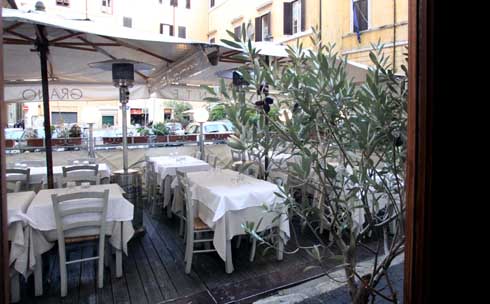
GRANO is a contemporary trattoria in a charming piazza around the corner from the Pantheon. Aesthetically, the white walls covered, in parts, with colorful children's drawings, give the main dining room the look of a postmodern architectural schoolhouse. 
The smaller, second dining room with the addition of bookshelves, seems the school's library. And the outdoor deck with large white umbrellas and numerous tables would, in this metaphor, be the playground. On the whole, Grano is a light and lively restaurant, serving tasty food, at not-too-steep prices, to a mostly local crowd. All good things.


Mozzarella and Alici
The kitchen is not quite chemistry lab, but it does turn out re-invented versions of Italian dishes, both Roman and from other regions up and down the Italian peninsula. For starters, the polpette di brasato con salsa verde are smallish meatballs of the famous piemontese wine-braised beef, here pulled, breaded, and deep fried, served on a slick of bracing green sauce. It's unusual and delicious. And for traditionalists, there are portions of pristine mozzarella di bufala and marinated anchovies served simply on a few leaves of arugula with a drizzle of extra-virgin olive oil. 
Polpo on Orzo Perlato
A delicious tweak of a Sicilian classic is the octopus antipasto (which could also be a primo): instead of pairing it with chickpeas or canellini beans as is the practice, a grilled baby octopus is placed atop a mound of orzo perlato, a grain -- not the pasta version of orzo -- with a bite that matches the chew of Sicilian polpo (octopus), here rendered tender by a braise before being grilled. The primi here are often standouts, including, when available, a pasta with tiny baby clams paired with asparagi di mare, know in English as sea beans. This is a delicious, fresh-tasting combination that encapsulates the brininess of the sea in every bite. 

Ditalini
Breaded Calamari
Also looking southward -- this time Campania -- is the simple pasta dish of tiny ditalini with a vegetarian "ragu" of sundried tomatoes, Gaeta olives, mozzarella, and basil. As for secondi, they're often less interesting. Porchetta (roasted suckling pig) with rosemary potatoes should be called 'porchetta...che peccato' (what a shame) because serving a so-so version of what can be one of The Greatest Things To Eat On This Planet is a sin. Ditto the tuna with caponatina: Sicily has some of the most prized fresh tuna on the planet, and caponata is one of the world's great traditional vegetable dishes (trumps ratatouille ANY day). Italians now need to learn how to cook said tuna, and Roman chefs could use some schooling in the ways of making sweet-and-sour eggplant-veggie-heaven the way it's meant to be made. Still, the breaded calamari is perfectly good, and with a side of broccoli or sauteed chicory, it makes a tasty main course.


Desserts here are relatively delicious, even though they don't stray far from Italian standards like tiramisu'. But the atmosphere is so pleasant, it's worth poring over the wine list to find a dessert wine or digestivo you can enjoy with your dining mates. A limoncello, or an amaro, perhaps? I liked the setting so much that I chose to have a recent birthday dinner here, surrounded by a dozen or so dear friends. We lounged and lingered, we ate, drank, and were merry.

And my lovely friends showered me with wine and prosecco and limoncello (my holy trinity?), and lots of gorgeous gifts, like the handmade earrings of breathtaking bronze freshwater pearls and jet I'm modeling in the photo below. And when all was said and done, they managed to find a tasty chocolate dessert into which they lodged a candle. I made my birthday wish -- and although it's bad luck to divulge that wish, I can say that it involves a lot more good food, great friends, and delicious fun in the future.


RISTORANTE GRANO
Piazza Rondanini 53
Roma 00186
+39 (06) 681 92 096
www.ristorantegrano.it